Remixxing the mainstream news one blog post at a time from the shores of Venice Beach. News, politics & conspiracy theories about world issues. All posts are opinions meant to foster comment, reporting, teaching & study under the "fair use doctrine" in Sec. 107 of U.S. Code Title 17. No statement of fact is made or should be implied. Ads appearing on this blog are solely the product of Blogger.com and do not necessarily reflect the opinions of Remixx World!
ST. LOUIS, July 9, 2010 -- The Boeing [NYSE: BA] Silent Eagle flight demonstrator aircraft F-15E1 completed a successful first flight on July 8 from Lambert St. Louis International Airport. During the 80-minute flight, F-15E1 opened and closed its left-side Conformal Weapons Bay, which contained an AIM-120 Instrumented Test Vehicle (ITV) missile. The ITV was not launched.
"The Silent Eagle demonstration flight validated our initial engineering design approach," said Boeing F-15 Development Programs Director Brad Jones. "Our intent was to verify all systems are operational in a flight environment. This flawless flight allows us to move into the next phase. In the next couple of weeks, we will ferry F-15E1 to the test range and launch an AIM-120."
"Everything about the flight went according to plan," said Boeing F-15 Chief Test Pilot Dan Draeger. "We saw nothing unusual during the flight, and we cleared the desired flight envelope needed to fire the missile at the test range; that is pretty much unheard of on a first flight."
The Silent Eagle is an innovative design solution developed in response to international customer requirements for a cost-effective, high-performance fighter aircraft to defend against future threats. The F-15SE offers unique aerodynamic, avionic and Radar Cross Section reduction features that provide the user with maximum flexibility to dominate the ever-changing advanced threat environment. The aircraft's Conformal Weapons Bays can carry a variety of air-to-air missiles and air-to-ground weapons.
The consensus of almost everybody who was on site at the Union Avenue studios of Channel 5 was that interim mayor Ford put on one of his best performances ever, looking mayoral and confident and scoring especially well with several improvised sallies, while Luttrell looked and sounded cautious, sticking close — with one significant exception — to the safety of previously established responses.
DARPA is building a universal translator like Reed Richards. I am actually glad to hear about this announcement, because the current handheld language translators that are available to the public suck. I know that this device will do what it claims to do.
CAMBRIDGE, Mass., July 7, 2010 /PRNewswire via COMTEX/ -- Raytheon Company's (NYSE: RTN) BBN Technologies has been awarded an additional $6.14 million in funding by DARPA (the Defense Advanced Research Projects Agency) under the Multilingual Automatic Document Classification, Analysis and Translation (MADCAT) program. This award follows Raytheon BBN's success in meeting required milestones during the first two years of the MADCAT program.
The MADCAT program's goal is to create a prototype system that quickly provides accurate, relevant, distilled, actionable information to military commands and personnel. It does this by converting foreign language text images, such as road signs, flyers, photographs, and handwritten notes, into English transcripts automatically, without the use of linguists and analysts.
Prem Natarajan, head of speech and language processing, Raytheon BBN Technologies, said: "Foreign language translation on the battlefield is slow, dangerous and expensive. The MADCAT system will help our troops understand road signs, print media and captured documents that could be of immediate importance to their safety and to the successful completion of their missions."
Under the contract, Raytheon BBN Technologies will further refine a prototype translation system developed under previous awards in this program that can be deployed on a laptop computer. To accomplish this, Raytheon BBN Technologies is integrating optical character recognition with its state-of-the-art translation and distillation techniques and developing novel methods to process handwritten text.
Raytheon BBN Technologies is a wholly owned subsidiary of Raytheon Company.
Raytheon Company, with 2009 sales of $25 billion, is a technology and innovation leader specializing in defense, homeland security and other government markets throughout the world. With a history of innovation spanning 88 years, Raytheon provides state-of-the-art electronics, mission systems integration and other capabilities in the areas of sensing; effects; and command, control, communications and intelligence systems, as well as a broad range of mission support services. With headquarters in Waltham, Mass., Raytheon employs 75,000 people worldwide.
The map of Africanized honey bees' spread in the United States has been updated. It is now posted on the Agricultural Research Service's (ARS) website at www.ars.usda.gov/ahbmap/.
The map shows the spread of Africanized honey bees (AHB) by county by year.
AHBs have continued their slow territorial expansion in the southern United States, and have now been confirmed in nine states. The map lists a county only when that state officially declares it to be Africanized.
There are discontinuities in the spread, especially between Louisiana and Florida where AHB spread is likely a result of human-assisted transport—such as AHB swarms hitchhiking on trucks, railroad cars, ships or airplanes.
Human-assisted transported AHBs are not considered a territorial spread unless the honey bees become established beyond the original swarm find.
ARS updates the AHB map about every six months.
The ARS Carl Hayden Bee Research Center in Tucson, Ariz., is responsible for official identifications of Africanized honey bees, especially when the honey bees are found in new states.
ARS is the U.S. Department of Agriculture's chief scientific research agency.
Bees pollinate a lot of our crops. Bees are dying off at staggering rates from year to year, especially in New Jersey. Who's going to pollinate our crops?
The honeybee population in New Jersey continues to decline at an alarming rate: 35 percent of managed colonies didn't survive the past winter, according to a survey by the New Jersey Beekeepers Association. That decline follows losses of 35 percent over the winter of 2008-09 and 17 percent in 2007-08, according to the association's Janet A. Katz.
Taranis is an Unmanned Combat Aircraft System (UCAS) advanced technology demonstrator.
The project aims to contribute to the understanding of strategic UCAS, through the demonstration of relevant technologies and their integration into a representative UAV system. Taranis will provide the UK MoD with experimental evidence on the potential capabilities of this class of UAV and help to inform decisions on the future mix of manned and unmanned fast jet aircraft.
Warton, United Kingdom; A prototype unmanned combat aircraft of the future, Taranis, has been unveiled by the UK Ministry of Defence for the first time today.
Named after the Celtic god of thunder, the concept demonstrator will test the possibility of developing the first ever autonomous stealthy Unmanned Combat Air Vehicle (UCAV) that would ultimately be capable of precisely striking targets at long range, even in another continent.
Should such systems enter into service, they will at all times be under the control of highly trained military crews on the ground.
Speaking at the unveiling ceremony at BAE Systems in Warton, Lancashire, Minister for International Security Strategy Gerald Howarth said: “Taranis is a truly trailblazing project. The first of its kind in the UK, it reflects the best of our nation’s advanced design and technology skills and is a leading programme on the global stage.”
Representing the pinnacle of UK engineering and aeronautical design, Taranis is an informal partnership of the UK MoD and industry talents including BAE Systems, Rolls Royce, QinetiQ and GE Aviation.
Speaking on behalf of the industry team, Nigel Whitehead, Group managing director of BAE Systems' Programmes & Support business, said: "Taranis has been three and a half years in the making and is the product of more than a million man-hours. It represents a significant step forward in this country's fast-jet capability. This technology is key to sustaining a strong industrial base and to maintain the UK's leading position as a centre for engineering excellence and innovation."
The Taranis prototype will provide the UK MoD with critical knowledge on the technical and manufacturing challenges and the potential capabilities of Unmanned Combat Air Systems.
Flight trials are due in 2011.
For further information, please contact:
Sqn Ldr Bruno Wood at UK Ministry of Defence Press Office Tel: +44 (0) 207 218 1534, Mob: +4 (0) 7919 305864
Tim Foreman at the DE&S Press Office Mob: +44 (0) 7990 506591
Adam Morrison, BAE Systems Tel: + 44 (0)1772 852714 Mob: + 44 (0)7525 390393 Email: adam.morrison@baesystems.com
I did not realize that the United States had built such large facilities in Antarctica (see below fact sheet). I only imagined tiny bases with 10-15 people at a time like a space shuttle crew. I was wrong. There are several bases in Antarctica including one that can house a 1,000 people.
Background: The National Science Foundation (NSF), through the United States Antarctic Program (USAP), manages U.S. scientific research in Antarctica, the southernmost continent. The program was established in 1959--immediately after the 1957-58 International Geophysical Year (IGY)--during which 12 nations established 60 Antarctic research stations.
NSF is an independent federal agency and is the only federal agency whose mission covers research in all fields of science and engineering. The USAP is a part of NSF's Office of Polar Programs (OPP). NSF not only manages the USAP, but NSF's director chairs the Interagency Arctic Research Policy Committee (IARPC).
President Reagan in a 1982 Presidential Memorandum confirmed NSF's management role for the nation's scientific presence in Antarctica.
More recently, during the Bush Administration, the White House Office of Science and Technology Policy named NSF as the lead federal agency for coordinating U.S. research and education activities for the International Polar Year (IPY) 2007-2008.
During IPY, which began in March 2007, the United States took a leading role among more than 60 nations in deploying thousands of researchers in a global research campaign to improve our understanding of the role of the polar regions as part of a global system. IPY extends through March 2009 to facilitate researchers' work during two annual observing cycles in each polar region, particularly in the isolated areas that are prohibitively cold and dark for roughly six months a year.
Major international and interagency science deployments were supported in Antarctica by USAP as part of IPY.
Scientific goals: The program's goals are: to understand the Antarctic and its associated ecosystems; to understand the region's effects on, and responses to, global processes such as climate; and to use Antarctica's unique features for scientific research that cannot be done as well elsewhere. Research is done in Antarctica only when it cannot be performed at a more convenient location.
Among the scientific disciplines encompassed by this broad mandate are astronomy, atmospheric sciences, biology, earth science, environmental science, geology, glaciology, marine biology, oceanography, and geophysics.
Program officers at NSF's Arlington, Va., headquarters administer grants to scientists nationwide who are interested in conducting research in Antarctica. Grants are made only after proposals have been reviewed by panels of subject-matter experts and found to exhibit exemplary intellectual merit as well as plans for broadly disseminating the knowledge obtained through the research.
USAP's international environmental role:While the U.S. Department of State leads the U.S. delegation to the annual Antarctic Treaty Consultative Meeting (ATCM), where the international community discusses a range of issues pertaining to the continent, NSF leads the U.S. delegation to the ACTM's Committee on Environmental Protection.
Research stations: To achieve the USAP goals, NSF operates three U.S. scientific stations year-round on the continent.
McMurdo Station. Located on the Ross Sea, Antarctica's largest station serves as a "gateway" to Antarctica for U.S. scientific field teams as well as the hub for most of the U.S. scientific activity. During the Southern Hemisphere's summer (austral summer), the population of scientists and support personnel at McMurdo often exceeds 1,000 people. In the austral winter (from February to early October), the population drops to roughly 180 persons. Even at the height of the austral summer, the population at McMurdo is equivalent to the enrollment of an average U.S. high school and is situated on a landmass the size of the U.S. and Mexico combined.
Amundsen-Scott South Pole Station. Located 841 statute miles inland from McMurdo, at the geographic South Pole, this station accommodates a maximum of 250 people during the austral summer. Temperatures there average minus 60 degrees Fahrenheit year-round; average austral winter lows are in the range of minus 80 degrees Fahrenheit. Astronomy and astrophysics are the primary scientific work carried out at the South Pole.
The station--named for a Norwegian and a Briton who raced to discover the South Pole arriving there in late 1911 and early 1912, respectively--was recently rebuilt over a period of several years. The new, elevated station--the third and newest U.S. station at the Pole--was dedicated in January 2008.
Palmer Station. Located on Anvers Island in the Antarctic Peninsula region and logistically isolated from the other stations, it relies mainly on the R/V Laurence M. Gould for transport of passengers and resupply from a port at the southern tip of South America. The R/V Nathaniel B. Palmer provides onboard research support in marine biology, oceanography, and geophysics and can support science in other areas of the Southern Ocean.
People: Some 3,500 Americans are involved each year in the program's research and logistical activities. Women constitute roughly 30 percent of the scientific and support workforce. Every year, more than 800 scientists and their support teams conduct research in Antarctica's unique environment.
Budget:The USAP budget for FY 2008 is approximately $295 million, and includes funds for merit-reviewed grants to scientists as well as logistics support. NSF's budget for FY 2008 totaled slightly more than $6 billion.
Facilities and Logistics: OPP provides scientists with logistics, operational and laboratory support in Antarctica. This includes the three U.S. research stations; summer camps (as required for research in the field); the ice-strengthened research ship, R/V Laurence M. Gould; the icebreaking research ship, R/V Nathaniel B. Palmer; a fleet of ski-equipped aircraft, including propeller-driven LC-130s, Twin Otters and a Basler 167; and helicopters.
Icebreaking: For many years, the U.S. Coast Guard provided icebreaking capability in McMurdo Sound to open a channel that annually allows ships to supply and refuel the stations at McMurdo and South Pole, and return materials to the United States. In recent years, a privately operated icebreaker has been chartered to open the channel while a Coast Guard vessel remained on stand-by to assist if necessary.
Studies are underway to determine an alternative or combination of alternatives for resupplying the stations, including continued use of icebreakers. Ships of the U.S. academic fleet and the ocean drilling program also occasionally support research in Antarctica.
Aviation support: Since 1999, the 109th Airlift Wing of the N.Y. Air National Guard, which flies and maintains a fleet of ski-equipped LC-130 "Hercules" aircraft--the only such aircraft squadron in the world--have provided airlift to the program to transport personnel and materiel, primarily on the Antarctic continent. The Guard assumed this responsibility from the U.S. Navy.
The "Hercs," as the LC-130s are known, are the program's workhorses, transporting scientists and support personnel, and all materials to Amundsen-Scott South Pole Station (including everything needed to build the new South Pole station) and to in-land sites of scientific research.
Intercontinental airlift from New Zealand to Antarctica is provided primarily by U.S. Air Force C-17 cargo jets.
Light aircraft and helicopter support for the program is provided by independent contractors.
Logistical support: NSF also contracts with Raytheon Polar Services Co. (RPSC), of Englewood, Colo., for logistical support for the Antarctic program.
Antarctica by the Numbers: Antarctica once was part of an enormous and temperate supercontinent called Gondwana. It broke free of its connection to other landmasses millions of years ago as the other continents drifted northward and began its southward drift. Today, it is a continent of extremes. For example:
The continental landmass is 5.4 million square miles, an area larger than the U.S. and Mexico combined.
More than 98 percent of the landmass is covered by an ice sheet that has accumulated over millions of years. The ice sheet averages just over 7,000 feet thick, but is more than twice that thick in places.
Antarctica holds 90 percent of the world's ice, which in turn represents 70 percent of the world's fresh water. Yet, precipitation in the interior averages only a few inches annually, making Antarctica one of the world's great deserts.
The ice sheet at the South Pole is in constant motion, moving about 30 feet every year and necessitating an annual remarking of the geographic South Pole.
As the ice moves out toward the edge of the continent, it breaks off, "calving" the world's largest icebergs, including one that was estimated to be similar in area to the state of Delaware.
In the unlikely event that the Antarctic ice sheet melted suddenly, it would raise sea level worldwide an estimated 200 feet, submersing much of the Gulf and Atlantic coastal areas of the U.S.
Winds blowing from the interior plateau often reach speeds of 80 miles per hour (mph) at the coast and can peak at 180 mph.
The lowest surface temperature ever recorded on Earth was -128.6 degrees Fahrenheit at Russia's Vostok Station in the continent's interior.
History: The U.S. scientific presence in Antarctica began in 1830, when James Eights became the first U.S. scientist on the continent. In 1841, a U.S. expedition mapped part of the Antarctic coast, proving that Antarctica was a continent. The largest single expedition to Antarctica took place in 1947 when 13 ships and 4,700 personnel were dispatched to the region for the U.S. Navy's "Operation Highjump."
-NSF-
Media Contacts Dana W. Cruikshank, NSF (703) 292-7738 dcruiksh@nsf.gov
The National Science Foundation (NSF) is an independent federal agency that supports fundamental research and education across all fields of science and engineering. In fiscal year (FY) 2010, its budget is about $6.9 billion. NSF funds reach all 50 states through grants to nearly 2,000 universities and institutions. Each year, NSF receives over 45,000 competitive requests for funding, and makes over 11,500 new funding awards. NSF also awards over $400 million in professional and service contracts yearly.
The Ocean Endeavor may be the first to leave the Gulf of Mexico, but it probably won't be the last. Per the Houston Chronicle and the official press release from Diamond Offshore Drilling below.
Diamond Offshore announced Friday that its Ocean Endeavor drilling rig will leave the Gulf of Mexico and move to Egyptian waters immediately — making it the first to abandon the United States in the wake of the BP oil spill and a ban on deep-water drilling.
HOUSTON, Jul 09, 2010 (BUSINESS WIRE) -- Diamond Offshore Drilling, Inc. (NYSE:DO) today announced that a subsidiary of the Company has entered into a term contract ending June 30, 2011, plus option, with Burullus Gas Company S.A.E. that will immediately mobilize the Ocean Endeavor from the Gulf Of Mexico (GOM) to Egypt.
Diamond Offshore President and CEO, Larry Dickerson, noted, "With new contracting severely restricted in the GOM as a result of the uncertainties surrounding the offshore drilling moratorium, we are actively seeking international opportunities to keep our rigs fully employed. This new contract for the Endeavor will help us preserve backlog, and will allow the previous operator of the rig to satisfy its contractual obligations which extended until June 30, 2011. We greatly regret the loss of U.S. jobs that will result from this rig relocation."
The new contract, combined with a $31 million early termination fee paid by the previous operator of the rig, is expected to generate combined maximum total revenue of approximately $100 million.
Diamond Offshore provides contract drilling services to the energy industry around the globe and is a leader in deepwater drilling. Maximum contract revenue as stated above assumes 100% rig utilization. Generally, rig utilization rates approach 95-98% during contracted periods; however, utilization rates can be adversely impacted by additional downtime due to unscheduled repairs, maintenance and weather. Additional information on Diamond Offshore Drilling, Inc. and access to the Company's SEC filings is available on the Internet at http://www.diamondoffshore.com.
SOURCE: Diamond Offshore Drilling, Inc.
Diamond Offshore Drilling, Inc. Director, Investor Relations Les Van Dyke, (281) 492-5370
Yikes! Corexit contains arsenic, but yet there is no current test for Corexit in fish and other seafood. I have really been a seafood fan, and with this news, that will not likely change anytime in the near future.
But all of these tests are only for oil compounds. Turns out no one is testing these fish for possible contamination by that controversial dispersant, Corexit.
(on camera): Diepoxybutane, I believe it's called, one of the -- one of the particularly toxic chemicals in the Corexit. You can't -- there's no chemical test being done right now?
STEIN: There's no -- there's not a chemical test for that right now.
GUPTA (voice-over): What? No test? So how can the guarantee of safety be complete? We decided to dig deeper to clarify.
NOAA says, in an abundance of caution, they're currently developing a chemical test for dispersants. It just isn't ready yet. And it can't come soon enough for the millions of people who want to eat these fish and those who make a living catching them.
For the full transcript of the above video, click here.
When local Columbus Sportsmen's Club member Shannon Burau went to Short Creek last Friday morning to mow the campground in preparation for the big weekend, he discovered what he described as a sickening scene.
"It just made me ill. The whole shoreline was pretty much solid with dead fish and it was stinking like a lagoon," said Burau. "It was just a disaster, a disaster. I've never seen anything like it."
...The water was the color of tea on Friday and now (Wednesday) is like black, black coffee and getting darker every day."
Make sure to scroll through the whole article, so you will see another likely cause - oil!
An oily film could be seen floating on top of much of the reservoir Wednesday morning. Where the water had receded, shoreline vegetation was black in color. A sulfur-like smell was in the air.
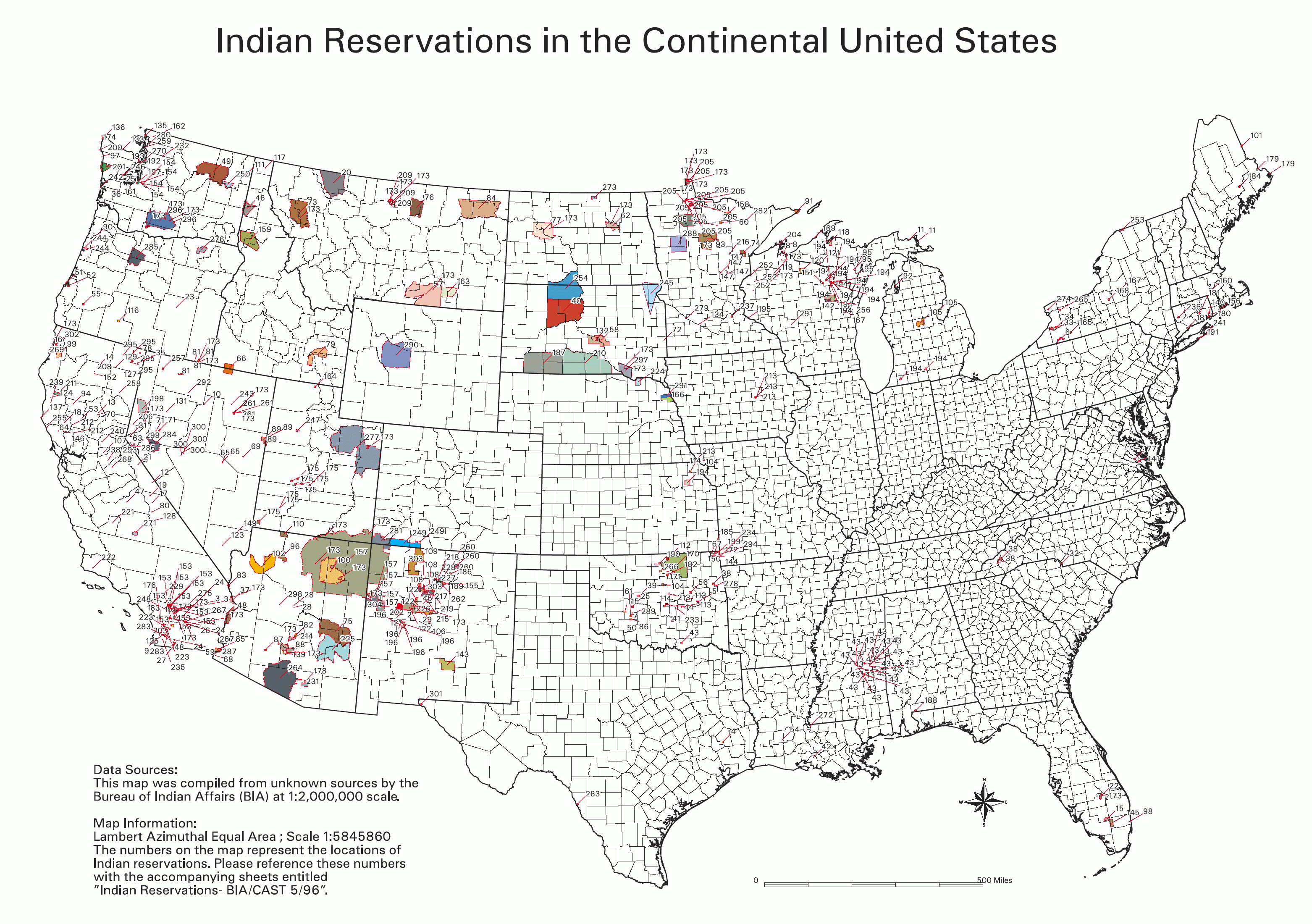
Investigators say there are signs on the western New York reservation saying “No Mail-No Rail,” in reference to a law that recently went into effect banning cigarette sellers from shipping tobacco through the mail.
THOUSANDS of Papuans rallied on Thursday to urge the provincial parliament to demand a referendum on self-determination, and reject the region's special autonomy within Indonesia.
An upper house of tribal leaders, the Papuan People's Assembly (MRP), voted in June to reject Papua's autonomy status, introduced in 2001 after the fall of the Suharto military dictatorship in Jakarta.
Witnesses said more than 2,000 Papuans in Jayapura, some of them wearing traditional outfits, were marching about 17 kilometres from the MRP's office to the provincial parliament building.
'Special autonomy has failed to protect the rights of indigenous Papuans,' protest leader Markus Haluk told AFP.
Holden has announced a recall of 34,432 Commodore utes to repair a faulty tailgate that can spring open while the car is moving.
Fairfax newspapers say this is the fifth recall for General Motors Holden this year, affecting 65,790 Commodores, Captivas, Combos, Cruzes and Daewoos.
I love you Governor Jan Brewer for your recent states' rights position against the federal government. Now that you are on a roll, why don't you build another one of these megawatt solar power station facilities in a sunny, desolate part of Arizona where you can generate millions of watts of power? New Mexico is getting a solar power plant. Governor Brewer, you need to get a solar power plant too unless there is a requirement to be a part of the United Nations' Clean Development Mechanism to get one.
Solar power is not just limited to the American States. In the Middle East, Abu Dhubi will soon have the largest concentrated solar power plant in the world, one with the capacity to generate 100 megawatts of power. This plant will be a part of the U.N. CDM that I mentioned above. Masdar, Total and Abengoa Solar are building the facility. The official press release is below.
Masdar, Abu Dhabi’s multi-faceted initiative advancing the development, commercialisation and deployment of renewable and alternative energy technologies and solutions, has appointed the bidding consortium of Total and Abengoa Solar as a partner to own, build and operate Shams 1, the world’s largest concentrated solar power plant and the first of its kind in the Middle East.
One of Masdar’s flagship projects, Shams 1 will directly contribute towards Abu Dhabi’s target of achieving 7% renewable energy power generation capacity by the year 2020.
The joint venture between Masdar (60%), Total (20%) and Abengoa Solar (20%) will develop, build, operate and maintain the plant which will be located in Madinat Zayed, approximately 120 kilometres southwest of Abu Dhabi in the United Arab Emirates (UAE).
Shams 1 will be the largest concentrated solar power plant in the world, extending over an area of 2.5 km², with a capacity of approximately 100 MW and a solar field consisting of 768 parabolic trough collectors to be supplied by Abengoa Solar. Construction is set to begin during Q3 2010 and is expected to take approximately two years.
Commenting on the announcement, Dr. Sultan Al-Jaber, CEO of Masdar, said: “The launch of Shams 1 marks a very important milestone for Masdar and for Abu Dhabi. I am very proud of the announcement we are making today because this project, which will be the first utility scale, commercial solar power project in the UAE, represents the translation into reality of the vision the Abu Dhabi leadership has for renewable energy in the Emirate. In addition, Shams 1 will allow Masdar to transfer to Abu Dhabi the know-how and expertise we have gained from our involvement in developing world-class renewable energy projects abroad, thus not only opening the door for renewable energy projects in the UAE but also for technology transfer, contributing towards the development of a knowledge-based economy and new job opportunities through the specializations required to manage and operate the plant.”
“I am delighted we are embarking on this journey together with our strategic partners Total and Abengoa Solar, both of whom have tremendous experience and technical know-how in developing projects such as Shams 1. It is through such partnerships that Masdar will succeed in developing and advancing renewable energy solutions and establish Abu Dhabi and the UAE as a world leader in renewable energy and clean technology. I would also like to thank our partners and stakeholders in Abu Dhabi – in particular ADWEA, ADNOC and the Regulation & Supervision Bureau – for their collaboration and support and our shareholder Mubadala for its backing and guarantee of Masdar’s share of the project ,” Al-Jaber continued.
“By participating in this ambitious project alongside Masdar and Abengoa Solar, Total develops its solar energy assets, enriches its portfolio of expertise with this first step in concentrated solar technology, and reaffirms its unique partnership with Abu Dhabi,” commented Philippe Boisseau, President, Total Gas & Power. “We are pleased to be partnered with Abu Dhabi, a country we have been working with for more than 70 years, in its pursuit of energy diversification and to contribute to the Masdar initiative, which promotes the development of renewable energies.”
Santiago Seage, CEO of Abengoa Solar, also expressed his satisfaction: “We have teamed with the most qualified partners in the region, Total and Masdar, to own and operate what will be the most advanced solar plant, featuring our cutting-edge technology.” In turn, Michael Geyer, Abengoa Solar’s Director of International Development, highlighted the immense potential of building large-scale solar plants in the Middle East, a region that offers both an unlimited solar resource and infinite site locations for implementation of solar plants in its deserts.
Shams 1 is registered as a project under the United Nations’ Clean Development Mechanism (CDM) and is eligible for carbon credits. It is be the first CSP plant registered under the CDM and the second project registered for Masdar. The plant will displace approximately 175,000 tonnes of CO2 per year, equivalent to planting 1.5 million trees or removing 15,000 cars from Abu Dhabi’s roads.
If it [major solar flare] happens anytime soon, we won't know exactly what to expect until it's over, and by then some modern communication systems could be like beachfront houses after a hurricane.
In early September in 1859, telegraph wires suddenly shorted out in the United States and Europe, igniting widespread fires. Colorful aurora, normally visible only in polar regions, were seen as far south as Rome and Hawaii.
This is probably nothing, but a standard emergency drill. Nevertheless, I wanted to put it out there in case something crazy goes down at Purdue in the next few days.
WEST LAFAYETTE, Ind. - Purdue University will test its emergency preparedness July 14 with the simulation of an on-campus event. The exercise is funded by a grant from the Department of Education Emergency Management in Higher Education program.
Purdue's Campus Emergency Preparedness and Planning Office, in conjunction with the Purdue Homeland Security Institute, will simulate an assault by armed gunmen involving multiple buildings, a scaled-down version of the Virginia Tech tragedy in 2007. The exercise, which will be concentrated on the southwest side of campus, will test police and emergency medical service's ability to respond as well as the Purdue Alert system and communications, said Ron Wright, director of university emergency preparedness.
The exercise will begin at approximately 8 a.m. and will be completed by noon. Signs will be posted in the affected areas. Drivers and pedestrians are asked to used caution and watch for emergency response vehicles.
All layers of Purdue Alert will be activated:
* All hazards outdoor sirens will sound in conjunction with the drill provided there is no threatening weather.
* A text message will be sent to those subscribed to the Purdue Alert texting service. To subscribe or update your information, visit http://purdue.edu/securepurdue/ and click on "Change My Emergency Contact Number."
* E-mail will be sent to purdue.edu accounts of all students, faculty and staff.
To improve the likelihood of receiving the text message, Scott Ksander, executive director of information technology networks and security, recommends that Verizon Wireless subscribers update the network information in their cell phones quarterly. To do so, call *228 ("star" 228) and select option 2, "Update Roaming Capabilities." No action is necessary for other wireless carriers.
IF civilisation is wiped out on Earth, salvation may come from space. Plans are being drawn up for a “Doomsday ark” on the moon containing the essentials of life and civilisation, to be activated in the event of earth being devastated by a giant asteroid or nuclear war.
Construction of a lunar information bank, discussed at a conference in Strasbourg last month, would provide survivors on Earth with a remote-access toolkit to rebuild the human race.
A basic version of the ark would contain hard discs holding information such as DNA sequences and instructions for metal smelting or planting crops.


_Omega_01.jpg)


